Thursday, November 10, 2016

'Impossibly Rare' 'Argyle Violet' Goes on Public Display in L.A. Starting Next Month

Described as "impossibly rare" and "a complete fluke of nature," the 2.83-carat "Argyle Violet" diamond will go on public display next month as part of the “Diamonds: Rare Brilliance” exhibition at the Natural History Museum of Los Angeles County.

argyleviolet1

New York-based L.J. West Diamonds placed the winning bid for the headliner of Rio Tinto's “Chroma Collection," a select grouping of 63 rare pink, red and violet diamonds from its Argyle mine in Western Australia. Each year, the mining company cherry-picks the best of the best to be offered at its annual tender.

Although the winning bid was not disclosed, experts estimated that the oval-cut Argyle Violet would fetch between $1 million and $2 million per carat, yielding a final price of $2.8 million to $5.6 million.

argyleviolet2

The principals of L.J. West were excited to share the amazing diamond with the public.

“I am glad to have it shown,” company president Larry West told NationalJeweler.com. “It’s so rare. Nobody’s ever seen stones like this, and I think it’s important for them to be out there in the public domain. It makes it more real for people. It’s not just a story.”

The Rio Tinto-owned Argyle mine generates more than 90% of the world’s pink diamonds, and on rare occasion will yield a violet stone. In the past 32 years, Argyle has produced only 12 carats of polished violet diamonds for its annual tender. In fact, before the discovery of the Argyle Violet, the mine had delivered just one other 1-carat-plus violet-colored diamond — and that was in 2008.

When Rio Tinto first revealed the unusual diamond back in May, company representatives could barely contain their excitement.

“Impossibly rare and limited by nature," said Rio Tinto’s general manager of sales Patrick Coppens, "the Argyle Violet will be highly sought after for its beauty, size and provenance.”

"A complete fluke of nature,” is how Josephine Archer from Argyle Pink Diamonds described the Argyle Violet to Yahoo7 News.

The Argyle Violet is the largest violet diamond ever recovered from the Argyle mine in Western Australia. Argyle’s master polisher Richard How Kim Kam worked for more than 80 hours cutting the 9.17-carat oddly-shaped rough diamond into its perfectly symmetrical final form. More than 69% of the diamond’s weight was lost during the cutting process.

The Argyle Violet was assessed a color grade of “Fancy Deep Greyish Bluish Violet” by the Gemological Institute of America. Violet diamonds owe their unique color to the presence of hydrogen atoms in the chemical composition of the stone.

The “Diamonds: Rare Brilliance” exhibition is schedule to run through March 2017. After that, the gem will be sold — not via the high-profile auction channels — but through L.J. West's retail partners.

Credits: Images courtesy of Rio Tinto.

Wednesday, November 9, 2016

'Secrets of the Gem Trade' Second Edition Is Revised and Expanded

Richard Wise's Secrets of the Gem Trade: The Connoisseur’s Guide to Precious Gemstones became a bestseller when it was first published in 2003. Over the past 13 years, the author has seen so many new twists and turns in the marketplace that he was inspired to make his authoritative book even better. The newly released second edition includes 11 new chapters, five new introductory essays and 161 additional images.

secrets1

By revealing how the world's best gemologists evaluate precious gems, Wise aims to give the reader the power to differentiate between a "good stone" and a "truly fabulous museum-quality gem."

Gem enthusiasts will see new chapters about jadeite, demantoid garnet, natural nacreous pearls, conch pearls, Golconda (Type IIa) diamonds, sunstone, peridot, moonstone, cobalt blue spinel, red/pink spinel and violet diamonds.

The publisher noted that the two new chapters on pearls address a huge resurgence in natural pearls. The inscrutable jade is discussed in clear terms that both Asian and Western readers will understand.

And in his new introduction, Wise tells the story of the Blue Whites, the crème de la crème of colorless diamonds.

secrets2

The 404-page visual delight includes exclusive images from two major museum collections and an array of the latest auction head turners. The images are individually spot varnished for color depth and accuracy.

The book is divided into two parts. The first examines the term "preciousness," as Wise leads the reader to a better understand of the criteria that define a gemstone. The second part contains a series of essays that delve deeply into the unique qualities and characteristics of what the author describes as 35 of "the most beautiful and the most important gemstones available today." These include diamond, pearl, tourmaline, sapphire, chalcedony, spinel, ruby and garnet.

Secrets of the Gem Trade has a cover price of $99.95 and is available at Amazon, Barnes & Noble and most other major book retailers.

Credits: Images by Brunswick House Press.

Tuesday, November 8, 2016

Nick Cannon Explores Modern Love — and Diamonds — in the New Docu-Short, 'Why Real Is Rare'

Nick Cannon, the host of America's Got Talent and Wild 'N Out, explores modern love — and diamonds — in the newly released "docu-short" titled Why Real Is Rare.

cannon2

Tapped by the Diamond Producers Association (DPA) to study relationships and help unlock the magic and mystery behind finding "the real thing," Cannon looks into the lives of six couples to reveal new truths about human connection and commitment in the modern age.

cannon1

"We share stories about the standout moments... that shaped their relationships, the challenges they've faced, and their unique take on why their commitment is the real deal," said Cannon. "Everyone loves in a different way, but they were all searching for something more genuine, and they found it in each other."

The "docu-short," which runs 3:18, can be seen on the "Real Is a Diamond" YouTube channel as well as the DPA website.

cannon3

It's part of a new integrated campaign, which marks are dramatic departure from traditional diamond marketing. The campaign invites consumers to take a fresh look at diamonds as an ideal symbol of authentic, meaningful connection and commitment. "Real is Rare. Real is a Diamond" is the diamond industry's first category campaign in almost a decade.

"This campaign explores the delta between being connected and having a connection," said Deborah Marquardt, Chief Marketing Officer of the DPA. "It's common today to have hundreds, if not thousands, of connections. People are 'connected' online 24/7 but the ability to find someone special and have a genuine emotional, physical and spiritual connection with them feels more rare than ever before. The moments when couples realize 'this is it' are as precious and individual as a diamond itself."

Check out the "docu-short" below...

Credits: Screen captures via YouTube.com; Photo source: Diamond Producers Association.

Monday, November 7, 2016

Die-Hard Cubs Fans Live a Dream, Get Engaged While Holding the World Series Trophy at Wrigley Field

With the Chicago Cubs winning the World Series for the first time in 108 years, die-hard fans Christopher Lenard and girlfriend Lindsay Fuhs did something that no other couple has ever done before — get engaged in front of the iconic ivy-covered wall at Wrigley Field while holding the World Series trophy.

cubs1

It happened on Friday as five million elated Cubs fans from all over the city celebrated the end of "The Curse," the longest World Series drought in Major League Baseball history.

The young couple was invited to take part in the World Series Trophy photo op thanks to Fuhs' connections with the team. Her dad, Rick, is a scoreboard operating and groundskeeper, who has worked for the franchise for 38 years.

The couple also has close ties to Wrigley Field. This is where the couple first dated, and Fuhs worked as an usher at Wrigley for two years when she was in high school.

The Commissioner’s Trophy was brought to Wrigley Field so team employees and loved ones could enjoy a once-in-a-lifetime opportunity to pose with the once-elusive trophy.

In a video posted to YouTube, we can see the happy couple as they stand in front of the ivy in centerfield. Fuhs is wearing a broad smile, Cubs cap and Cubs National League Champions t-shirt while carefully holding the trophy. Her boyfriend — decked out in a Cubs jersey and Cubs cap — is standing proudly at her side.

Nobody is aware that he has a surprise hidden in the front-left pocket of his jeans.

After the official photos are taken, Fuhs calls for one more shot and aims her gaze at a second photographer. Lenard calls for one more shot, as well, but it's for a different reason.

cubs2

At that moment, Lenard pulls the ring box from his pocket, gets down on one knee and proposes to his startled girlfriend.

"Oh, my God," Fuhs gasps.

"Will you marry me?" asks Lenard.

"Yes!" exclaims Fuhs.

cubs4

To free up her left hand, which is locked onto the precious trophy, a member of the Cubs promotion team steps in to assist. Fuhs turns her attention to her fiancé and new diamond engagement ring.

cubs7

The couple kisses, embraces and basks in the glory of a Cubs World Series win and the prospects of an exciting life together.

cubs6

Fuhs documented her monumental day with more than 100 photos on Facebook. The couple's story has gone viral, with stories on USAToday.com, MLB.com, ESPN.com, Chicago Sun Times, Yahoo Sports and 63,000 views on YouTube.com.

The "W" on the nail of her ring finger resembles the famous "Win" flag, which Cubs fans fly as a symbol of their dedication to the team.

cubs5

In explaining his motivation for popping the question at Wrigley Field, Lenard wrote on YouTube.com, "The Cubs won for the first time in 108 years and I decided to do something literally no one has ever done before."

It doesn't get much better than that.

Check out the video below...

Credits: Screen captures via YouTube.com; Photos via Facebook/Lindsay.Fuhs.

Thursday, November 3, 2016

Graff Unveils the World's Largest D-Flawless Heart-Shaped Diamond

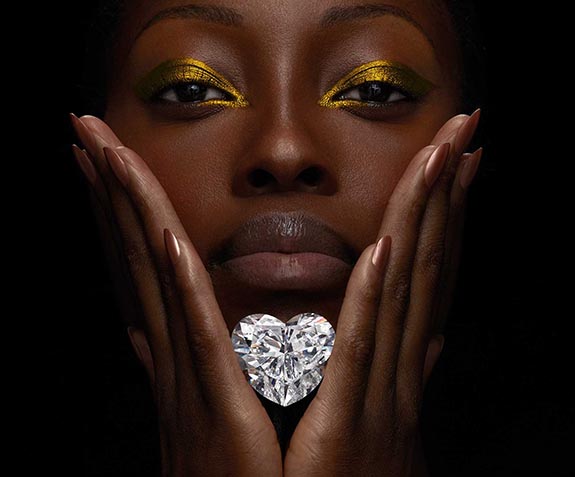
Laurence Graff, the billionaire jeweler whose name is attached to some of the most famous diamonds in the world, has introduced the Graff Venus, the world's largest D-flawless heart-shaped diamond.

graffvenus1

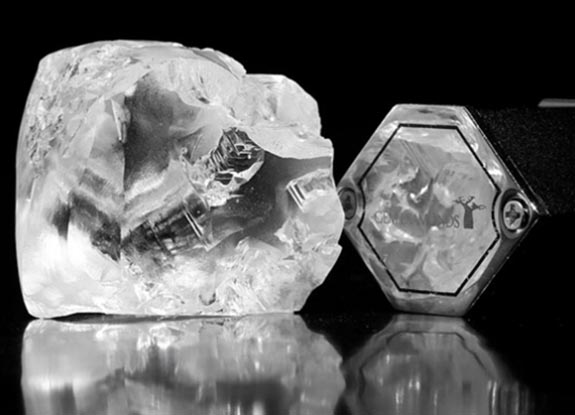
About the size of a walnut and weighing 118.78-carats, the Graff Venus was painstakingly extracted from a 357-carat rough diamond that was sourced last year at the Letšeng Mine in Lesotho.

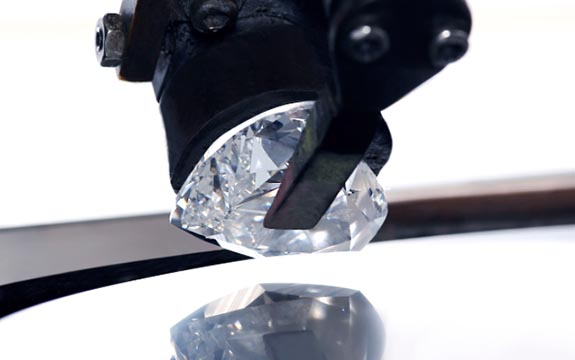
Heart-shaped diamonds are generally a high-risk proposition for cutters because the unusual shape is prone to cracking during the cleaving and polishing process. Graff's risk was multiplied many times due to the enormous size and value of the stone.

graffvenus3

The process took 18 months, during which Graff and his team analyzed every excruciating detail of the rough stone. They even had to develop special tools to cut the stone.

graffvenus2

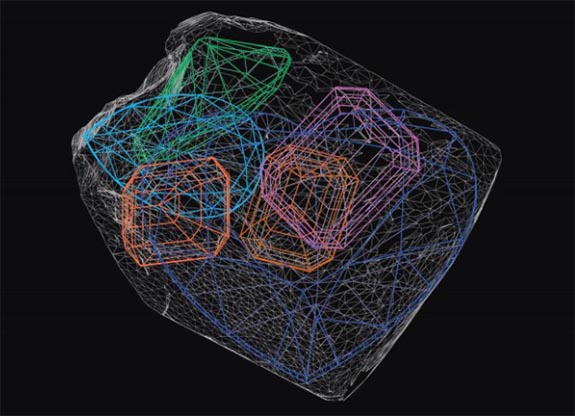
The computer-generated illustration shows how the heart-shaped diamond (dark blue outline) was segmented from the rest of the original rough. Twenty-two additional diamonds were culled from the same piece.

The London-based chairman of Graff Diamonds — whose diamond collection includes the 24.78-carat Graff Pink, 102.79-carat Graff Constellation and the 31.06-carat Wittelsbach-Graff — couldn't be more proud of his latest creation, calling it "absolute perfection."

"The stone itself is beyond words," he said. "It is the most beautiful heart-shape diamond I have ever seen.”

The Gemological Institute of America agreed by awarding its highest grades to the Graff Venus. The stone was rated D-color, flawless, Type IIa with excellent polish and symmetry. Type IIa diamonds are almost or entirely devoid of impurities.

The Graff marketing team believes the diamond will eventually be incorporated into a pendant, brooch or tiara.

According to the Robb Report, Graff has had a role in cutting and polishing more than half of the 20 most exceptional diamonds discovered during the past century.

graffvenus4

The Letšeng mine, which sits at an altitude of 10,000 feet in the tiny kingdom of Lesotho near the southern tip of Africa, has a long history of producing top-quality diamonds in huge sizes. The 357-carat rough diamond from which the Graff Venus was extracted had netted $19.3 million for Gem Diamonds in September of 2015. At the time, it was sold to a unnamed buyer.

Credits: Graff Venus images courtesy of Graff Diamonds. Rough diamond courtesy of Gem Diamonds.

Wednesday, November 2, 2016

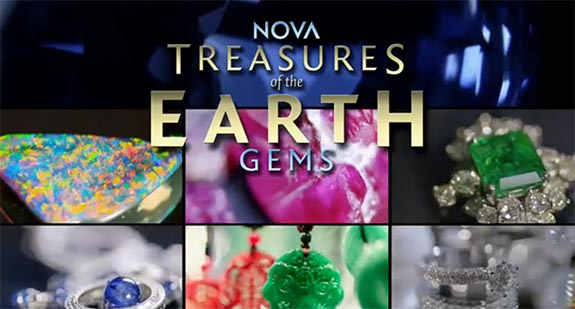
NOVA Series 'Treasures of the Earth' Explores the Origin and Allure of Gems and Precious Metals

Tonight, PBS will broadcast the first of an epic three-part NOVA series called "Treasures of the Earth: Gems, Metals, and Power." The 60-minute shows will take us on a stunning journey deep within the earth to discover the incredible forces of nature that forge gemstones, precious metals and other valuable resources.

nova1

"Our earth is a master chef," says geologist Lung Chan in the first episode. "She knows how to cook."

In the first hour, subtitled "Gems," NOVA literally crisscrosses the globe to get an insider's view of the gem trade— from the workshop of an iconic luxury jeweler in New York City to a sapphire mine of Sri Lanka, from North Carolina's emerald fields to the jade-laden Forbidden City of China.

Not only does NOVA cover the beauty, value and intrigue behind these exquisite treasures, but also delves into the amazing role these gemstones play in helping geologists unravel the mysteries of plate tectonics. NOVA will also explore the riches that may have originated in space.

nova2

"Treasures of the Earth: Gems, Metals, and Power" will air on November 2, 9 and 16. The second episode will cover precious metals and the third episode with tackle the subject of power as it relates to the control of natural resources.

In "Metals," NOVA will look at the astounding properties that have made them the pillars of human civilization. From the enduring luster of gold, to the conductivity of copper and the strength of steel, metals have reshaped societies and defined eras, according to NOVA.

In the third segment, "Power," the viewer will learn the energy secrets locked in the molecules of natural resources, such as coal, oil and natural gas. NOVA will also look at climate change and the hunt for cleaner forms of energy.

Credits: Images via pbs.org.

Tuesday, November 1, 2016

Perot Museum in Dallas Houses the Most Magnificent Examples of November's Birthstones

Topaz and citrine share the spotlight as the official birthstones for the month of November. And perhaps nowhere in the world can you see bigger and more magnificent examples of these gem varieties than at the Perot Museum of Nature and Science in Dallas.

perot1a

You thought we were going to say "the Smithsonian in Washington, D.C.," but here's the catch.

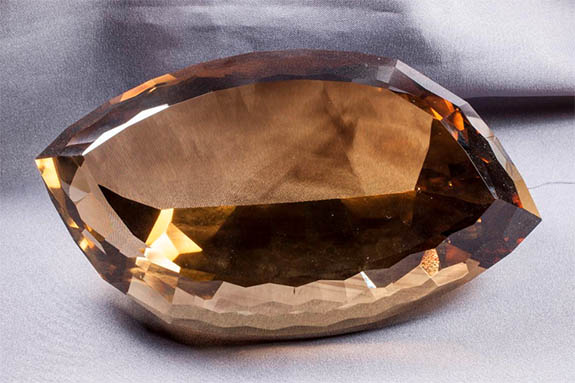
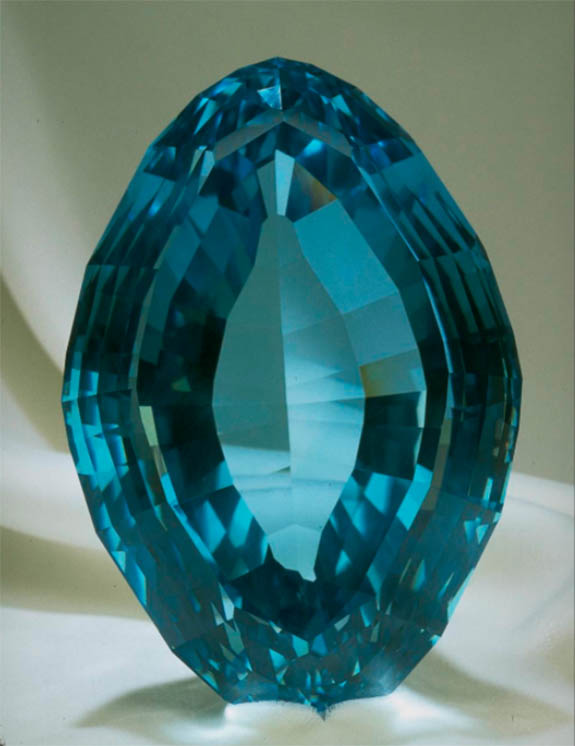
The Smithsonian has loaned 29 of its biggest faceted gems to the Perot Museum for a limited showing that runs through January 17, 2017. Among the specimens headlining the “Giant Gems of the Smithsonian” exhibition is the famous 22,892-carat American Golden topaz, a 19,747-carat smoky citrine and a football-shaped 7,033-carat irradiated blue topaz.

perot2

The American Golden Topaz is the third-largest faceted gemstone in the world. Sourced in Minas Gerais, Brazil, and tipping the scales at a whopping 10.1 pounds, the American Golden Topaz was cut by Leon Agee over a period of two years in the late 1980s from a 26-pound stream-rounded cobble owned by Drs. Marie L. and Edgar F. Borgatta.

In the top photo, the faceted gem sits in the foreground while two other natural topaz crystals are nearly the size of the seated young girl. They weigh 70 pounds and 111 pounds, respectively, but are not part of the Perot exhibit.

perot3

Sourced in Bahia, Brazil, the modified marquise-shaped smoky citrine was faceted in 1987 by Michael Gray and acquired by the Smithsonian in 2013. At 8.7 pounds, it's the largest smoky citrine in the National Gem Collection.

perot4

It's a common jewelry industry practice to irradiate pale-colored topaz, which becomes a brilliant blue after the process. The football-shaped gem you see here likely started out as colorless or pale yellow-brown, according to the Smithsonian. Discovered in Ouro Preto, Brazil, the 3.1-pound gem was gifted to the Smithsonian in 1981.

perot5

“Giant Gems of the Smithsonian” is making its temporary residence at the Lyda Hill Gems and Minerals Hall, which is one of the Perot Museum's most popular exhibits.

Credit: Photos of American Golden Topaz with child, smoky citrine and blue topaz courtesy of Smithsonian. Display photo of American Golden Topaz by Observer31 at English Wikipedia [CC BY 3.0], via Wikimedia Commons. Perot Museum by Joe Mabel [CC BY-SA 3.0], via Wikimedia Commons